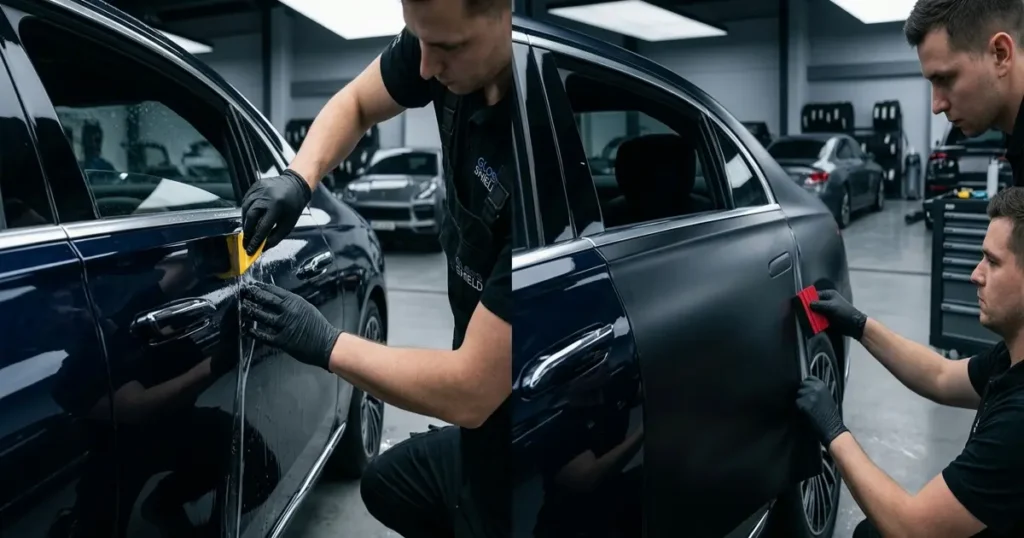
Paint protection film and car wrap are two of the most popular vehicle surface treatments available today, yet many car owners confuse one for the other. If you are trying to decide which option is best for your vehicle, you are not alone. Both solutions offer distinct advantages, but they serve very different purposes. In this guide, we compare paint protection film versus car wrap across purpose, durability, maintenance, and ideal use cases so you can make a confident, informed decision for your car.
Key Takeaways
- Paint protection film (PPF) is primarily designed to shield your car’s original paint from physical damage like rock chips, scratches, and road debris, while a car wrap is mainly a cosmetic solution for changing your vehicle’s appearance.
- Your choice should depend on whether your priority is protection, aesthetics, or a combination of both using a hybrid ppf wrap approach.
- Professional installation is critical for both products to ensure long-lasting results and to avoid damage to the underlying paint.
What Is Paint Protection Film?
Paint protection film, commonly known as PPF, is a thick, transparent thermoplastic urethane film applied directly to a vehicle’s painted surfaces. It acts as an invisible shield between the paint and the outside world. PPF is engineered to absorb impacts from small stones, road grit, bug splatter, and minor abrasions without transferring that damage to the paint below.
One of the standout qualities of PPF for car surfaces is its self-healing technology. When exposed to heat, such as sunlight or warm water, minor surface scratches on the film disappear on their own. This makes it an exceptionally durable and low-maintenance protective layer for car owners who want to preserve their vehicle’s original factory finish for years.
According to the Car and Driver resource library, paint protection films have become a standard recommendation for new vehicle owners seeking long-term paint preservation. At Corsa Automotive’s detailing and protection services, PPF installation is carried out with precision to ensure full adhesion and a seamless, optically clear finish.
What Is a Car Wrap?
A car wrap is a large vinyl film applied over the vehicle’s exterior to change its color, add graphics, or create a unique visual effect. Unlike paint protection film, a car wrap is primarily a cosmetic upgrade. It can mimic finishes like matte, satin, gloss, chrome, or even custom printed patterns that would be difficult and expensive to replicate with traditional paint.
Car wraps are popular among businesses using their vehicles for branding and among car enthusiasts who want a bold new look without committing to a permanent paint job. The vinyl used in wraps is thinner than PPF and offers limited protection against physical impacts. It is best thought of as a stylistic layer rather than a protective one.
Paint Protection Film vs Car Wrap: A Direct Comparison
Purpose: Protection vs Aesthetics
The most fundamental difference between paint protection film and car wrap is their purpose. PPF is engineered purely for protection. Its primary job is to guard the underlying paint against chips, scratches, UV rays, and chemical stains caused by bird droppings or tree sap. A car wrap, on the other hand, exists to transform the visual identity of your vehicle. It is a design tool more than a protection tool.
If you own a new car and want to preserve its showroom condition, ppf for car surfaces is the logical choice. If you want your vehicle to stand out with a custom color or finish, a car wrap delivers that visual impact. Understanding this distinction is the first step toward choosing the right solution for your specific need.
Durability: How Long Does Each Option Last?
When comparing durability, paint protection film has a clear edge. A professionally installed PPF can last anywhere from seven to ten years under normal conditions, maintaining its clarity and protective integrity throughout. The self-healing property means minor daily wear does not degrade the film’s performance over time.
Car wraps typically last three to five years before the vinyl begins to fade, peel, or crack at the edges. Exposure to harsh sunlight, humidity, and Kerala’s monsoon conditions can accelerate this degradation. For car owners in this region, the durability advantage of paint protection film is especially relevant given the demanding local climate.
Maintenance: What Each Option Requires
Both PPF and car wrap require regular care, but the nature of that care differs. Paint protection film is relatively easy to maintain. Regular washing with a pH-neutral car shampoo and occasional decontamination keeps the film in excellent condition. Because of the self-healing surface, minor swirl marks and light scratches resolve without any intervention.
Car wraps demand more careful handling. Automated car washes with brushes can lift or tear the vinyl edges. Harsh chemicals can break down the adhesive layer. Wraps generally need hand washing and periodic inspection to catch any lifting edges before they worsen. If you prefer a lower-maintenance long-term solution, a ppf wrap or full PPF coverage is the more practical investment.
Appearance: Clarity, Finish, and Customisation
In terms of appearance, both options have strengths in different areas. Paint protection film is optically transparent, meaning your car’s original color and finish remain fully visible. Modern PPF products also come in gloss-enhancing and matte variants, so you can subtly alter the sheen of your paint while still benefiting from full protection.
Car wraps win when it comes to creative customisation. The range of colors, textures, and finishes available in vinyl wrap is virtually limitless. From deep matte black to brushed metal or holographic finishes, wraps offer visual possibilities that PPF cannot replicate. For car owners who want a completely new look, a wrap delivers that transformation far more affordably than a full respray.
Cost: Which Option Offers Better Value?
Cost is a significant consideration for most car owners. Car wraps are generally less expensive than a full paint protection film installation. However, because wraps need to be replaced more frequently, the long-term cost difference narrows considerably. A quality PPF installation is a larger upfront investment, but its longer lifespan and the paint preservation it provides can actually protect the resale value of your vehicle over time.
Damage to a car’s original paint can significantly reduce its market value. By investing in PPF for car surfaces from the outset, you are effectively protecting the monetary value of the vehicle alongside its physical appearance. This makes PPF a strong choice for owners of premium, luxury, or high-value cars. You can explore the full range of protection and detailing options available at Corsa Automotive to find the right fit for your budget and vehicle.
Can You Combine Paint Protection Film and Car Wrap?
Yes, and many car enthusiasts choose exactly this approach. A common method is to apply paint protection film to high-impact zones such as the hood, fenders, bumpers, and side mirrors, and then wrap the rest of the vehicle in a chosen vinyl color or finish. This hybrid approach, sometimes called a ppf wrap strategy, gives you the best of both worlds.
You get robust physical protection where the car needs it most, combined with the visual customisation that a wrap provides across the full body. For owners of sports cars, luxury vehicles, or any car driven frequently on highways and rural roads, this combination is particularly effective. The team at Corsa Automotive can help you plan a coverage strategy that balances protection with the aesthetic outcome you are looking for.
Which One Should You Choose?
The right choice depends entirely on your priorities as a car owner. If protecting your paint from physical damage, preserving resale value, and maintaining that factory-fresh look for as long as possible are your goals, paint protection film is the clear winner. It is the most effective barrier available between your car’s paint and the road environment.
If your priority is a bold visual transformation, budget-conscious personalisation, or temporary branding for a business vehicle, a car wrap is the more appropriate tool. It delivers visual impact quickly and can be removed or replaced when you want a change.
For many car owners, the ideal answer is not one or the other but a thoughtful combination of both. Whatever direction you choose, professional installation is critical. Poorly installed PPF or vinyl wrap can trap moisture, create bubbles, or damage the paint underneath when removed. Always work with experienced technicians who understand the materials and the vehicle’s surface requirements.
Conclusion
Paint protection film and car wrap each have a well-defined role in vehicle care. PPF delivers unmatched protection, durability, and long-term paint preservation. Car wrap offers visual versatility and creative freedom at a lower entry cost. Understanding what each product does and does not do is the key to making the right decision for your car. Whether you choose PPF, a wrap, or a combination of both, professional application makes all the difference. To explore your options and get expert advice tailored to your vehicle, get in touch with Corsa Automotive and let the team help you protect and personalise your car the right way.
Paint protection film is designed to protect your car’s original paint from physical damage like chips and scratches. A car wrap is a cosmetic vinyl film that changes your vehicle’s color or finish. PPF protects while a wrap transforms appearance.
Standard PPF is optically clear and preserves your car’s original color and finish. Matte and gloss-enhancing PPF variants can subtly alter the sheen. Unlike a car wrap, paint protection film does not dramatically change the vehicle’s appearance but keeps it pristine.
Paint protection film typically lasts seven to ten years with proper care. A car wrap generally lasts three to five years before fading or peeling begins. PPF offers significantly longer durability, making it a stronger long-term investment for car owners in demanding climates.
Yes, combining PPF on high-impact zones with a vinyl wrap on the rest of the vehicle is a popular approach. This ppf wrap strategy gives you strong physical protection where it matters most while still allowing full visual customisation across the car’s body panels.
It is technically possible but not commonly recommended. PPF is most effective when applied directly to the car’s original painted surface. Applying it over a wrap can reduce adhesion performance and may compromise both layers. A professional assessment is always advisable before attempting this combination.
Yes, quality PPF for car surfaces includes UV-resistant properties that help prevent the paint underneath from fading or oxidising over time. This is particularly valuable in Kerala’s climate, where strong sunlight and heat can accelerate paint degradation on unprotected vehicles.
When installed and removed correctly by a trained professional, car wrap removal is generally safe for the underlying paint. However, wraps left on too long or improperly removed can lift or damage the paint surface. Professional installation and timely replacement are essential to avoid paint issues.
Paint protection film is the better choice for preserving resale value. By shielding the original paint from chips, scratches, and UV damage, PPF keeps the car looking newer for longer, which directly supports a higher resale price when you discuss your vehicle protection goals with Corsa Automotive before making your final decision.
Maintaining PPF is straightforward. Wash the car regularly using a pH-neutral shampoo, avoid abrasive brushes, and keep the surface free of bird droppings or tree sap. The self-healing surface handles minor scratches automatically when exposed to heat, reducing the need for frequent professional intervention.
For expert installation in Kerala, Corsa Automotive offers professional-grade paint protection film and detailing services in Chengannur and Kottayam. You can book an appointment with the Corsa team to discuss the best protection solution suited to your specific vehicle and driving needs.