Paint Protection Film: The Secret Behind Cars That Never Age
Paint protection film is the invisible shield that separates cars that look showroom-fresh after five years from those that look worn and faded. If you have ever wondered why some vehicles seem immune to scratches, stone chips, and sun damage, the answer almost always points back to PPF for cars. This blog breaks down exactly how PPF preserves a car’s original paint, why it outperforms other surface treatments for long-term protection, and what makes it a smart investment for any car owner in Kerala who takes pride in their vehicle’s appearance.
Key Takeaways
- Paint protection film creates a physical barrier over your car’s factory paint, blocking everyday damage before it reaches the surface.
- PPF is self-healing, UV-resistant, and chemically inert, making it one of the most comprehensive forms of car paint protection film available today.
- Applying the best paint protection film early, ideally on a new car, dramatically extends the life of the original paint and helps retain resale value.
What Exactly Is Paint Protection Film?
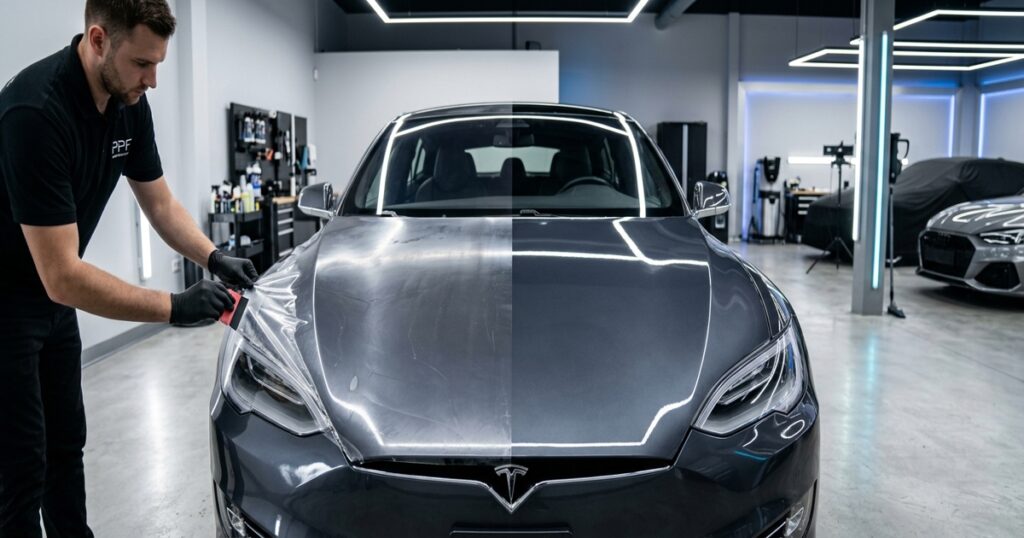
Paint protection film is a thin, transparent thermoplastic urethane film bonded directly to a vehicle’s painted surfaces. It acts as a sacrificial layer, absorbing impacts and abrasions that would otherwise permanently damage the paint beneath. The film is nearly invisible to the naked eye, so the car retains its original look while gaining a powerful layer of physical defense.
Modern car paint protection film is engineered with multiple layers. The outermost layer is a clear coat that resists minor scratches and chemical stains. Below that sits the urethane base, which absorbs physical impacts. The adhesive layer at the bottom bonds the film to the paint without leaving residue when professionally removed. Together, these layers form a system that handles everything from gravel roads to monsoon-driven road grime.
According to technical literature published by SAE International, thermoplastic urethane coatings demonstrate superior elongation and impact resistance compared to standard automotive clear coats, which is why PPF is the preferred choice among automotive protection specialists worldwide.
How PPF Preserves a Car’s Original Paint Over Years
The most impressive quality of paint protection film is its ability to absorb damage without transferring it to the paint underneath. Stone chips are one of the leading causes of paint degradation on Kerala roads. Every chip, if left untreated, becomes a gateway for rust and oxidation. PPF stops chips at the film level, keeping the original factory paint completely intact beneath.
UV radiation is another silent threat. Over time, prolonged sun exposure breaks down clear coat and causes paint to fade, dull, or peel. High-quality PPF for cars includes UV inhibitors within the film itself. These inhibitors absorb and scatter ultraviolet rays before they penetrate the paint layer, meaning the color stays true and vibrant for much longer than an unprotected surface ever could.
One of the most talked-about features in the best paint protection film products is self-healing technology. When the film surface develops light swirl marks or fine scratches from washing or parking, gentle heat, either from sunlight or warm water, activates the film’s elastomeric properties. The surface literally flows back to its original form, erasing the scratch without any polishing or buffing required.
Protection Against Chemical Contaminants and Bird Droppings
Bird droppings, tree sap, industrial fallout, and acidic rain are chemical threats that etch into paint surprisingly fast. Kerala’s climate, with its high humidity and heavy monsoon season, makes vehicles especially vulnerable to surface contamination. Car paint protection film is chemically inert on its outer surface. Contaminants sit on top of the film rather than bonding with the paint, and they wipe away cleanly without leaving permanent marks.
This resistance to chemical damage is one of the key reasons why vehicles protected with PPF for cars look significantly newer compared to unprotected ones after just a couple of years of real-world driving. The paint underneath has simply never been exposed to the full force of environmental abuse.
PPF vs. Regular Waxing and Surface Treatments
Many car owners rely on regular waxing or paint sealants to protect their vehicles. These treatments do offer some surface-level protection, but they wear off within weeks or months and provide no meaningful physical barrier against stone chips or deep scratches. Wax also offers limited UV resistance and zero self-healing capability.
Paint protection film, by contrast, is a permanent physical layer. It does not wash off in rain, does not degrade with regular car washing, and does not require frequent reapplication to stay effective. For car owners in Chengannur, Kottayam, or anywhere in Kerala who drive regularly on highways and rural roads, the physical protection offered by car paint protection film far exceeds what any topical wax or sealant can deliver.
Premium wax treatments still have a place in a complete car care routine, particularly for maintaining gloss and adding depth to the finish. But as a standalone protective measure against the kind of damage that accumulates over five years of daily driving, wax simply cannot compete with PPF.
Which Parts of Your Car Benefit Most from PPF?
Not every car owner needs full-body coverage. Targeted application of the best paint protection film to high-impact zones can make a significant difference in how the car looks over time. The most vulnerable areas are:
- Front bumper absorbs the most stone chips and road debris from highway driving.
- Hood and bonnet face direct impact from gravel and insects at speed.
- Front fenders receive overspray from the front wheels on wet roads.
- Door edge guards prevent paint chips from car door contact in parking lots.
- Rocker panels along the lower body catch road grime and debris thrown up by tyres.
- Side mirrors are exposed to wind-driven particles and frequent brushing in tight spaces.
Full-body paint protection film coverage provides the most comprehensive results, but even partial coverage on these critical zones delivers a meaningful upgrade over no protection at all. A professional detailing studio will assess your vehicle and recommend a coverage plan based on how and where you drive.
The Role of Professional Installation in PPF Performance
The quality of car paint protection film is only as good as the installation behind it. Air bubbles, misaligned edges, and improper surface preparation can compromise the film’s adhesion and visual clarity. Professional installation involves thorough paint decontamination, precise film cutting to match each panel’s geometry, and careful application techniques that eliminate bubbles and lifting edges.
A proper PPF process begins with a detailed vehicle evaluation to identify any existing paint imperfections before the film goes on. This is critical because applying film over scratches or contaminants locks those issues in permanently. An evaluate, enhance, and protect approach ensures the paint is in its best possible condition before any protective layer is applied.
Surface preparation quality directly determines how well the film bonds, how long it lasts, and how clearly it performs. Choosing a skilled, experienced detailing studio is just as important as choosing the right film product, because even the highest-grade film will underperform when applied without proper technique and preparation.
How Early Application Maximises PPF Benefits
The ideal time to apply paint protection film is on a brand-new car before any chips, scratches, or UV exposure have occurred. When PPF goes on a factory-fresh surface, it locks in that pristine condition permanently. Every subsequent year of driving sees the film take the damage, while the paint underneath remains untouched.
For owners of used or older vehicles, paint correction should be completed before PPF application. Light scratches, swirl marks, and surface oxidation need to be removed first, otherwise the film preserves the imperfections alongside the paint. After professional paint correction and polishing, the vehicle is restored close to its original finish before PPF seals in that result.
This two-step approach, correction followed by protection, is what produces the dramatic before-and-after results that make some five-year-old cars look indistinguishable from the day they left the showroom. At Corsa Automotive, this process forms the foundation of every PPF service, ensuring that each vehicle is brought to its best possible condition before any protective film is applied.
Maintaining Your PPF for Long-Term Results
Applying PPF for cars is not a set-and-forget solution. Some basic maintenance practices keep the film performing at its best for the long term. Washing with a pH-neutral car shampoo avoids degrading the film’s outer clear coat. Avoiding high-pressure jets directed at film edges prevents lifting over time. Periodic inspection of the film’s condition allows early detection of any lifting or contamination beneath.
Scheduling regular visits to a trusted detailing studio helps keep both the film surface and the vehicle’s overall condition in excellent shape. A professional eye can spot early signs of film wear or edge lifting that an untrained observer might miss during routine washing. Corsa Automotive recommends a periodic inspection schedule tailored to your vehicle’s daily usage and driving environment, so protection performance never silently declines between services.
Conclusion: Invest in Paint Protection Film Before Your Paint Pays the Price
Paint protection film is the single most effective way to preserve a car’s original factory paint over years of real-world driving. From stopping stone chips and UV fading to resisting chemical contamination and self-healing surface scratches, car paint protection film addresses every major threat to a car’s long-term appearance. The cars that still look brand new after five years are not lucky. They are protected. If you want your vehicle to be one of them, speak with the qualified detailing professionals at Corsa Automotive about PPF for cars and find the right protection plan for your vehicle before the first chip or fade sets in.
Paint protection film is a transparent thermoplastic urethane layer applied over a car’s painted surfaces. It absorbs stone chips, scratches, and UV rays before they reach the paint. The film acts as a sacrificial layer, keeping the original factory paint intact beneath it for years.
High-quality car paint protection film installed by a professional can last many years depending on the film grade, driving conditions, and maintenance. Vehicles driven regularly on highways or rural roads in Kerala tend to see the most benefit from durable, long-lasting PPF coverage.
Yes. Applying PPF for cars on a new vehicle from day one locks in the factory-fresh condition permanently. Every stone chip, UV ray, and chemical contaminant hits the film instead of the paint, preserving the car’s finish and supporting its long-term resale value significantly.
Absolutely. For older vehicles, professional paint correction removes scratches and swirl marks before PPF application. This two-step process restores the paint close to its original condition before the film seals in that refreshed result, making it highly worthwhile for used car owners seeking long-term protection.
Paint protection film prevents light to moderate scratches extremely well. Its self-healing outer layer erases fine swirl marks using heat from sunlight or warm water. Very deep or sharp impacts may penetrate the film, but the original paint beneath usually remains fully protected from permanent damage.
Partial coverage targets the most vulnerable zones such as the front bumper, hood, and fenders. Full-body coverage protects every painted panel. The best paint protection film plan depends on your driving habits, budget, and how comprehensively you want your vehicle’s finish protected over time.
Wash with pH-neutral shampoo, avoid high-pressure jets near film edges, and inspect periodically for lifting or contamination. Scheduling routine visits to a professional detailing studio helps keep car paint protection film performing at its best and extends the overall lifespan of the protective layer.
No. PPF for cars is optically clear and designed to be nearly invisible. It does not alter the original paint color or reduce gloss. In fact, many high-quality films add a slight depth and clarity to the finish, making painted surfaces appear even richer and more vibrant.
Yes, when professionally installed and removed, paint protection film comes off cleanly without leaving adhesive residue or damaging the paint beneath. The key is using the right removal technique and having it done by an experienced detailing studio rather than attempting DIY removal at home.
Kerala’s high humidity, heavy monsoon rains, and intense UV exposure accelerate paint fading, oxidation, and chemical contamination. Car paint protection film is especially valuable in this climate because it blocks UV rays, repels acid rain and bird droppings, and keeps paint in pristine condition year-round.