
Onam brings thousands of Kerala families back onto the highways, and every one of those journeys puts real strain on a car. This onam road trip car care checklist walks through our checks across tyres, fluids, lights, comfort, interiors and paint so your vehicle is ready before you leave. Work through it a few days before departure, not the night before, and pair it with a session of professional car detailing if any item raises a flag.
Key Takeaways
- A pre Onam inspection should cover six zones: tyres and brakes, fluids and battery, lights and electricals, AC and comfort, interiors, and exterior paint protection.
- Most breakdowns on festival routes trace back to tyres, coolant or brake wear that a five minute check would have caught.
- Protecting the paint before a long drive matters as much as mechanical checks, since highway grime, stone chips and sun exposure add up fast on a single trip.
1. Tyres and Brakes
Tyres and brakes carry the highest breakdown risk on any long Onam drive, especially on the ghat sections and narrow state highways that connect Kerala towns. Check these four points before you load the boot.
- Tyre pressure, including the spare: Cold tyre pressure drops when a car has been parked for a day, so check it in the morning before driving and match it to the number on the door jamb sticker, not the tyre wall. Underinflated tyres overheat on long highway stretches and raise fuel use noticeably.
- Tread depth and wear pattern: Run a coin test across each tyre. Uneven wear on the inner or outer edge usually points to alignment trouble that will get worse over a five or six hour drive, so get it corrected before you leave rather than after a scare on wet tarmac.
- Brake pad thickness and pedal feel: A soft or spongy brake pedal, or a grinding sound when braking, means pads or fluid need attention now. Onam traffic includes sudden stops near junctions and toll points, so brakes need to respond the first time, every time.
- Wheel alignment and balancing: A car that pulls to one side or vibrates at seventy kilometres an hour is telling you the alignment is off. Fix this before a long trip since poor alignment also chews through tyres faster during exactly the kind of continuous driving Onam travel involves.
2. Fluids and Battery
Fluid levels and battery health rarely get attention until something fails, usually at the worst possible moment on a highway. These four checks take fifteen minutes and prevent most roadside breakdowns.
- Engine oil level and colour: Dark, gritty oil below the minimum mark accelerates engine wear on a long drive where the engine runs continuously for hours rather than short city bursts. Top up or change it if a service is due before departure.
- Coolant level in the reservoir: Kerala heat combined with hours of highway running pushes engine temperature higher than daily commutes ever do. A coolant reservoir at or below the minimum line risks overheating exactly when you are furthest from a service centre.
- Battery terminals and charge: Corroded terminals or a battery older than three years are common causes of a car that will not start on the morning you are meant to leave. A quick voltage check at a service centre removes this risk entirely.
- Brake and windscreen washer fluid: Low brake fluid affects stopping power over a long trip, and an empty washer reservoir leaves you without a way to clear mud or insect residue picked up on rural stretches during an Onam drive.
3. Lights and Electricals
Many Onam journeys start early morning or run into the evening, so every light on the car needs to work, not just the headlamps.
- Headlights, taillights and indicators: Walk around the car with the engine on and test every light, including brake lights, which you cannot see from the driver seat. A failed indicator on a ghat road with sharp turns is a real hazard, not a minor issue.
- Fog lights and hazard lamps: Kerala can still see late monsoon showers even during the Onam season, and fog lights or hazards make a real difference in low visibility on unfamiliar routes with oncoming traffic.
- Horn and wiper function: A horn that works and wipers that clear the windscreen in one pass rather than smearing it are basic safety items that are easy to overlook until it starts raining at speed.
- Dashboard warning lights: Note any warning light that stays on after the engine starts, whether it is the check engine light, ABS or the battery symbol, and get it diagnosed before the trip rather than hoping it resolves itself on the road.
4. AC and Comfort
A cabin that stays cool and comfortable matters over a multi hour Onam drive with the whole family in the car.
- AC cooling performance: If the AC takes longer than usual to cool the cabin or blows warm air intermittently, get the gas level and compressor checked now. A failing AC on a hot afternoon drive turns a festive trip into an uncomfortable one fast.
- Cabin air filter condition: A clogged cabin filter reduces airflow and lets dust and pollen into the car, which matters more on rural roads and near construction stretches common on Kerala highways during this season.
- AC vents and blower speed: Confirm every vent directs air properly and the blower runs cleanly at each speed setting, since a struggling blower motor often means an unnoticed strain that could fail during the trip itself.
- Seat and seatbelt condition: Check that seatbelts retract smoothly and buckles click firmly, especially in rear seats that see less daily use. On a long drive with children in the car, this is a basic safety step worth thirty seconds.
5. Interior Reset
A clean, organised interior keeps a long drive comfortable and makes it easier to spot anything left behind or out of place before departure.
- Deep interior vacuuming: Crumbs, sand and old wrappers under seats and in door pockets build up over weeks of regular use. A proper vacuum before a long trip means a fresher cabin for hours of continuous travel with family.
- Odour and upholstery treatment: Musty smells in the cabin get worse when the AC recirculates warm air for hours. A steam and odour treatment before the trip removes trapped smells at the source instead of masking them with a spray.
- Boot space organisation: Onam travel usually means extra luggage, gifts and festival items. Clear out unused items from the boot beforehand so there is room for everything without stacking bags against the rear windscreen and blocking visibility.
- Dashboard and glass cleaning: Streak free glass and a dust free dashboard reduce glare from the sun, which matters directly for visibility on long, bright highway stretches during Onam daytime travel.
6. Exterior and Paint Protection
The exterior takes the most punishment on a long drive, from stone chips to sun exposure, and this is the area most owners forget to prepare. See our guide to common paint mistakes for what typically goes wrong.
- A full exterior wash and clay treatment: Removing embedded grime before a long drive means fewer swirl marks later, since dirt trapped under new road dust acts like sandpaper against the paint during highway driving.
- Paint Protection Film on high impact areas: A layer of paint protection film on the bonnet, mirrors and front bumper absorbs stone chips and insect impact that a normal painted surface cannot resist on a long highway drive.
- Ceramic or wax sealant on remaining panels: A protective layer on the rest of the body sheds mud and rain water faster, which makes post trip cleanup considerably easier after a dusty or wet Onam drive.
- Wheel and underbody rinse plan: Note that wheels and the underbody will need a proper rinse after the trip, since brake dust and road salt residue from highway travel sit closer to moving parts than most owners realise.
- Windscreen chip check: Inspect the windscreen for any existing small chip. A chip that seems harmless before a trip often spreads into a crack after hours of vibration and temperature change on a long highway drive.
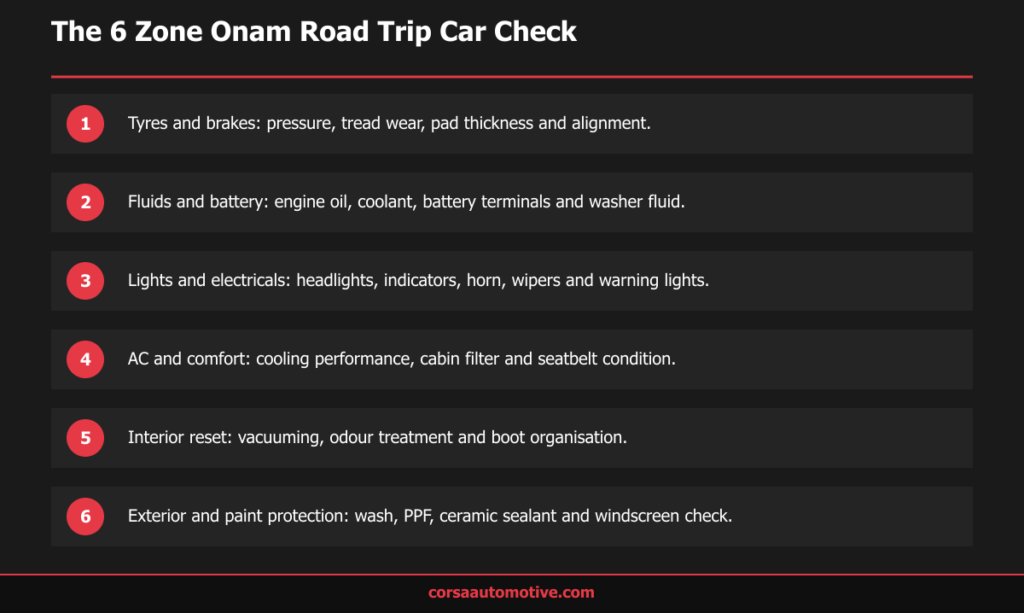
Infographic showing the six zone Onam road trip car care checklist
Conclusion
A car that has been checked across all six zones, tyres, fluids, lights, AC, interior and paint, is far less likely to interrupt an Onam journey with an avoidable problem. If you would rather hand this list to professionals, book a pre Onam inspection and detailing slot with Corsa Automotive in Thellakom, Kottayam. Customers booking a Full Body PPF package this month also get a flat 50 percent off Sun Films, a useful pairing before any long festival drive.
Frequently Asked Questions
How many days before Onam should I get my car checked?
Book your inspection at least five to seven days before travel. This leaves enough time to order parts, complete detailing work, and fit paint protection film without last minute pressure before the journey.
Is paint protection film worth it just for one road trip?
Yes, if the trip involves highway driving. PPF absorbs stone chips and insect residue that would otherwise mark bare paint, and the protection continues to work on every drive after the Onam trip as well.
What tyre pressure should I use for a loaded car during Onam travel?
Use the manufacturer figure listed on the door jamb sticker, and add the recommended increase for a fully loaded car if your manual specifies one, since extra luggage and passengers change the ideal pressure slightly.
Does AC use more fuel on a long Onam drive?
Running the AC does increase fuel consumption somewhat, but a well serviced AC system is far more efficient than a struggling one, so a pre trip AC check actually helps fuel economy rather than hurting it.
Can I get my car detailed and inspected on the same visit?
Yes. Most Kottayam studios, including Corsa Automotive, combine a mechanical check with detailing and paint protection work in a single visit so you are not making multiple trips before departure.
What should I check if my car has been sitting unused for weeks?
Check the battery charge, tyre pressure, brake feel and fluid levels first, since a stationary car loses tyre pressure and can develop a weak battery faster than one driven regularly through the week.
Are highway stone chips really a common problem in Kerala?
Yes. Kerala highways mix fast moving trucks with loose gravel shoulders, and stone chips on the bonnet and bumper are one of the most common paint complaints Corsa sees after long distance festival travel.
How long does a full pre Onam car check take?
A thorough check across tyres, fluids, lights, AC and interior typically takes two to three hours, while adding detailing or paint protection film extends this to a half day or full day booking depending on scope.
What if I notice a warning light right before I plan to leave?
Do not ignore it. Visit a service centre immediately, since dashboard warning lights that appear close to a long drive often indicate a fault that will worsen under sustained highway conditions rather than resolve on its own.