Paint Protection Film and ceramic coating both get called car protection, and both come up whenever someone asks how to keep a new car looking new. But PPF vs ceramic coating is not a choice between a better option and a worse one. They protect against different things, and understanding that difference matters more than picking a side.
Key Takeaways
- PPF is a physical film that absorbs impact from stone chips, scratches and road debris.
- Ceramic coating is a chemical sealant that resists water, stains, chemical etching and UV fade, and adds gloss.
- Most owners who want complete protection choose both, applying ceramic coating over PPF on impact prone panels and directly on paint elsewhere.
What Paint Protection Film Actually Does
Paint Protection Film is a thick, transparent polyurethane layer applied directly onto the painted surface, most often on the bonnet, front bumper, mirrors and leading edges of the bonnet and doors. Its job is physical defence. It sits between the paint and the outside world, absorbing the force of stone chips, gravel, minor scrapes against branches or gate posts, and general road debris that would otherwise dent or chip bare paint.
Good quality film also carries a self healing property. Light swirl marks and fine scratches can soften or disappear entirely when warmed by sunlight or hot water, because the film’s top layer flexes back into shape rather than staying permanently marked. This is something ceramic coating cannot do, since a ceramic layer is thin and hard rather than flexible.
PPF typically carries a multi year warranty against yellowing and cracking, and a well installed film on a car in Kerala conditions, with regular sun and monsoon exposure, holds up for five to seven years or more before any panel needs a fresh application.
What Ceramic Coating Actually Does
Ceramic coating is a liquid polymer, often containing silicon dioxide, that chemically bonds to the clear coat and cures into a hard, glass like layer measured in microns. It does not stop a stone chip. What it does extremely well is resist everything chemical and environmental: water beads and slides off instantly, bird droppings and tree sap do not etch into the surface as quickly, brake dust and road grime wipe away with far less effort, and the paint underneath gains meaningful protection from UV fade.
The other big draw is the finish. Ceramic coating deepens gloss and colour noticeably compared to bare or waxed paint, which is why it has become the default choice for owners who care about how the car looks in daily light, not just how it survives a single trip.
Ceramic coating needs the paint underneath to be properly corrected and clean before application, since it locks in whatever condition the paint is in at that moment, swirl marks and all, for the life of the coating.
PPF vs Ceramic Coating: A Direct Comparison
The table below breaks the two down by what actually matters when deciding.
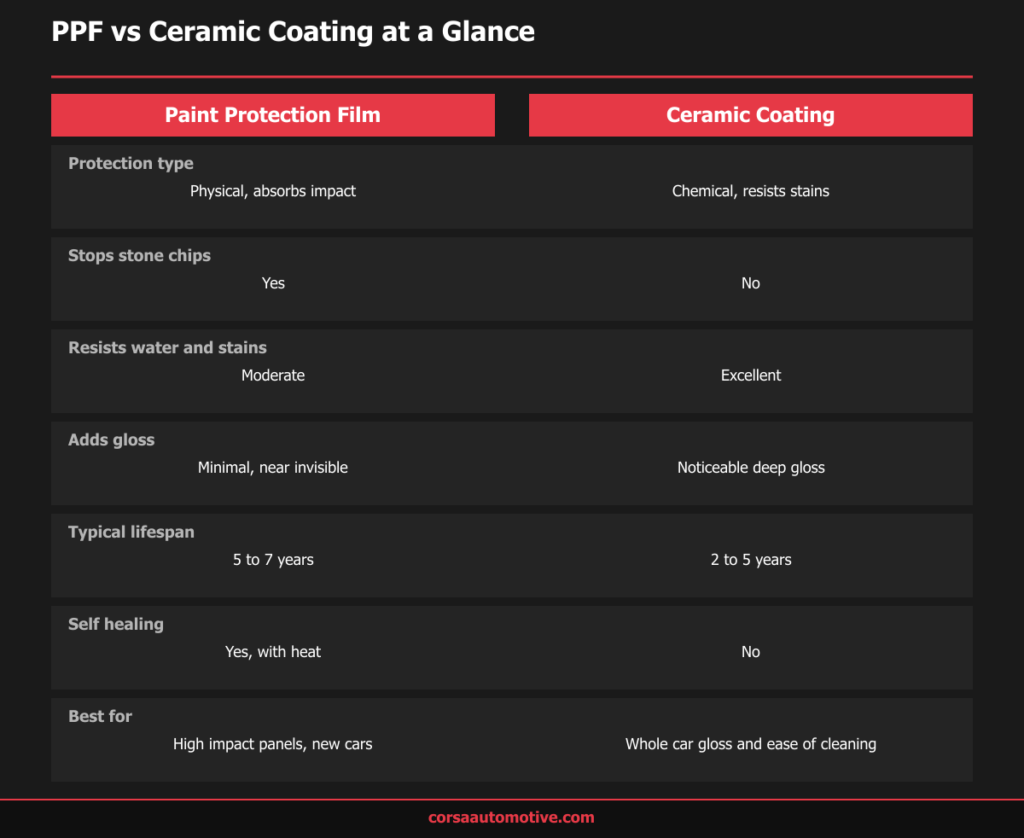
[Alt: Infographic comparing PPF and ceramic coating across protection type, durability and cost] | File: infographic-3-ppf-vs-ceramic.png
When to Choose PPF First
Choose PPF first if the car is new, if you drive frequently on highways or rural roads with loose gravel, or if you simply want to prevent chips on the panels that take the most impact. New car owners in particular benefit from applying film within the first weeks, before the first stone chip has a chance to happen.
Fleet vehicles, delivery cars and anything driven long distances on a regular schedule also benefit disproportionately from PPF, since the cumulative impact damage over tens of thousands of kilometres of driving is far greater than what an occasional weekend driver experiences.
When to Choose Ceramic Coating First
Choose ceramic coating first if your main concerns are water spots, staining, oxidation and keeping the car looking freshly polished with less effort at each wash. Owners who park outdoors under trees, near the coast, or in areas with hard water tend to see the most benefit from ceramic coating specifically.
Owners preparing a car for resale or a private sale also lean toward ceramic coating first, since the immediate gloss improvement makes a strong first impression in listing photographs and in person viewings, even if the car has not been driven enough to warrant PPF’s impact protection.
Common Myths About PPF and Ceramic Coating
One persistent myth is that ceramic coating makes a car scratch proof. It does not. Ceramic coating resists chemical staining and light surface marring but offers little defence against a genuine impact or a deep scratch, which is exactly the gap PPF is designed to fill.
Another common misconception is that PPF is only worth it for expensive or imported cars. In practice, any car that is driven regularly on Kerala roads faces the same stone chip and tar exposure regardless of its price point, and the cost of preventing damage is consistently lower than the cost of correcting it later.
Can You Combine Both?
Yes, and it is increasingly the standard recommendation. Apply PPF to the bonnet, front bumper, mirrors and door edges, then apply a ceramic topcoat over the film and directly onto the remaining painted panels. This gives impact protection where it matters most and chemical, UV and gloss protection everywhere else. Our piece on why some cars still look brand new after five years shows what this combination looks like in practice over time.
Maintenance Differences Owners Should Expect
PPF needs very little ongoing maintenance beyond regular washing, though owners should avoid abrasive brushes at automated car washes during the first week after installation while the film fully bonds to the panel. Beyond that, it behaves like normal paint for cleaning purposes.
Ceramic coating maintenance is slightly more involved. It benefits from a dedicated ceramic booster spray every few months to refresh hydrophobic performance, and harsh degreasers or dish soap should be avoided since they can strip the coating’s surface layer faster than a pH neutral car shampoo would.
Both protections still require the underlying paint to be washed regularly. Neither PPF nor ceramic coating is a substitute for cleaning, they simply make that cleaning easier and reduce how much damage accumulates between washes.
Cost Considerations for Kerala Car Owners
PPF installation costs more upfront than ceramic coating because of the material cost and the labour intensive, panel by panel application process. Ceramic coating is generally more accessible as a starting point for owners protecting a car for the first time, while PPF represents a larger investment usually reserved for panels facing the highest impact risk.
When comparing quotes, ask specifically what is included: full body versus partial coverage for PPF, and how many layers or years of durability a ceramic coating package covers, since prices can vary significantly based on these details rather than reflecting a simple better or worse product.
Spread across the multi year lifespan of each protection, the effective yearly cost of either option is usually lower than owners expect once weighed against the cost of periodic paint correction on unprotected paint.
What This Means for Kerala Drivers Specifically
Kerala’s driving conditions push both protections toward being genuinely necessary rather than optional extras. Highways connecting Kottayam to neighbouring districts carry enough truck traffic and loose gravel shoulders that stone chip risk is real for nearly every regular driver, which argues strongly for at least partial PPF coverage on the front of the car.
At the same time, the state’s humidity, monsoon rainfall and tree cover in residential areas make ceramic coating’s water and stain resistance similarly relevant for almost any car parked outdoors. Few Kerala drivers fall cleanly into a category that needs only one of the two, which is part of why combining them has become the practical default recommendation rather than a premium add on.
Conclusion
PPF vs ceramic coating is not really a competition. PPF protects against physical damage, ceramic coating protects against chemical and environmental wear, and together they cover nearly everything a daily driven car faces on Kerala roads. Talk to the team at Corsa Automotive about which combination suits your driving pattern, and book a consultation to see both applied correctly on your car.
Frequently Asked Questions
Does ceramic coating stop stone chips like PPF does?
No. Ceramic coating is a thin hard layer that resists chemicals and water but does not absorb physical impact the way PPF does. For chip protection, PPF is the correct choice, not ceramic coating.
Which lasts longer, PPF or ceramic coating?
Quality PPF often lasts five to seven years, while ceramic coating typically lasts two to five years depending on the product and maintenance. Both outlast basic wax, which needs reapplication every few months.
Is PPF or ceramic coating better for a new car?
PPF is generally recommended first for a new car since it prevents the earliest damage, stone chips and scratches, from ever reaching the factory paint. Ceramic coating can then be added over or alongside it.
Can I apply ceramic coating over PPF?
Yes, this is a common and recommended combination. Ceramic coating bonds to PPF just as it does to paint, adding gloss and chemical resistance on top of the film’s impact protection.
Which option costs less, PPF or ceramic coating?
Ceramic coating is usually less expensive than full body PPF since it does not require the same material and labour intensive installation process. Partial PPF on high impact panels is a common middle ground.
Does PPF turn yellow over time like old car film used to?
Modern PPF from reputable brands includes UV inhibitors and typically carries a warranty against yellowing and cracking, unlike older film generations that discoloured within a few years.
Will ceramic coating make my car’s paint look glossier than PPF?
Yes, ceramic coating adds more visible gloss and depth to the paint colour, while PPF is designed to be as invisible as possible rather than change the finish.
How do I know which protection my driving style actually needs?
Visit Corsa Automotive’s gallery to see before and after examples of both, or speak with the team directly, since daily highway drivers and mostly city drivers usually get different recommendations.