
PPF vs Ceramic Coating: Which Car Protection Fits You
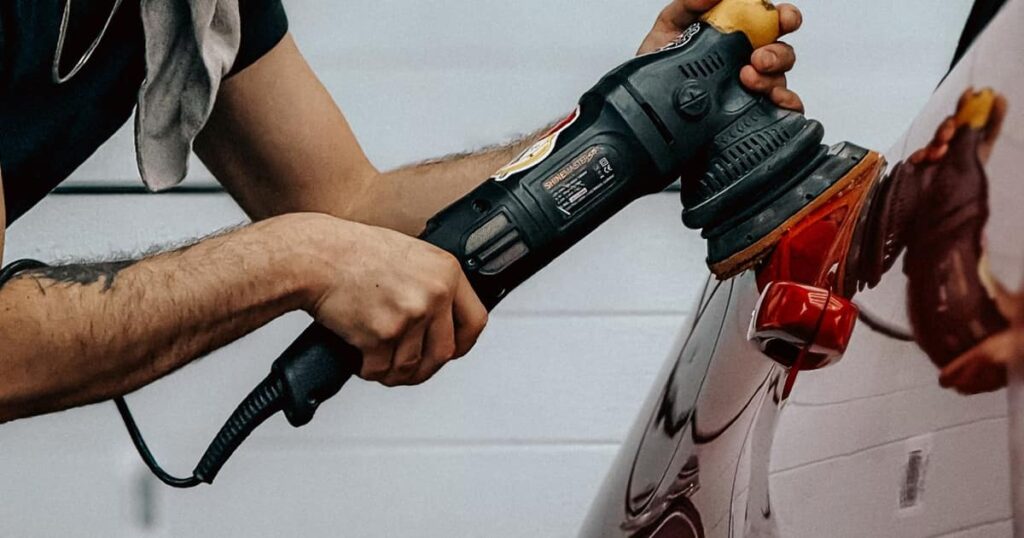
Paint Protection Film and ceramic coating both get called car protection, and both come up whenever someone asks how to keep a new car looking new. But PPF vs ceramic coating is not a choice between a better option and a worse one. They protect against different things, and understanding that difference matters more than picking a side. Key Takeaways What Paint Protection Film Actually Does Paint Protection Film is a thick, transparent polyurethane layer applied directly onto the painted surface, most often on the bonnet, front bumper, mirrors and leading edges of the bonnet and doors. Its job is physical defence. It sits between the paint and the outside world, absorbing the force of stone chips, gravel, minor scrapes against branches or gate posts, and general road debris that would otherwise dent or chip bare paint. Good quality film also carries a self healing property. Light swirl marks and fine scratches can soften or disappear entirely when warmed by sunlight or hot water, because the film’s top layer flexes back into shape rather than staying permanently marked. This is something ceramic coating cannot do, since a ceramic layer is thin and hard rather than flexible. PPF typically carries a multi year warranty against yellowing and cracking, and a well installed film on a car in Kerala conditions, with regular sun and monsoon exposure, holds up for five to seven years or more before any panel needs a fresh application. What Ceramic Coating Actually Does Ceramic coating is a liquid polymer, often containing silicon dioxide, that chemically bonds to the clear coat and cures into a hard, glass like layer measured in microns. It does not stop a stone chip. What it does extremely well is resist everything chemical and environmental: water beads and slides off instantly, bird droppings and tree sap do not etch into the surface as quickly, brake dust and road grime wipe away with far less effort, and the paint underneath gains meaningful protection from UV fade. The other big draw is the finish. Ceramic coating deepens gloss and colour noticeably compared to bare or waxed paint, which is why it has become the default choice for owners who care about how the car looks in daily light, not just how it survives a single trip. Ceramic coating needs the paint underneath to be properly corrected and clean before application, since it locks in whatever condition the paint is in at that moment, swirl marks and all, for the life of the coating. PPF vs Ceramic Coating: A Direct Comparison The table below breaks the two down by what actually matters when deciding. [Alt: Infographic comparing PPF and ceramic coating across protection type, durability and cost] | File: infographic-3-ppf-vs-ceramic.png When to Choose PPF First Choose PPF first if the car is new, if you drive frequently on highways or rural roads with loose gravel, or if you simply want to prevent chips on the panels that take the most impact. New car owners in particular benefit from applying film within the first weeks, before the first stone chip has a chance to happen. Fleet vehicles, delivery cars and anything driven long distances on a regular schedule also benefit disproportionately from PPF, since the cumulative impact damage over tens of thousands of kilometres of driving is far greater than what an occasional weekend driver experiences. When to Choose Ceramic Coating First Choose ceramic coating first if your main concerns are water spots, staining, oxidation and keeping the car looking freshly polished with less effort at each wash. Owners who park outdoors under trees, near the coast, or in areas with hard water tend to see the most benefit from ceramic coating specifically. Owners preparing a car for resale or a private sale also lean toward ceramic coating first, since the immediate gloss improvement makes a strong first impression in listing photographs and in person viewings, even if the car has not been driven enough to warrant PPF’s impact protection. Common Myths About PPF and Ceramic Coating One persistent myth is that ceramic coating makes a car scratch proof. It does not. Ceramic coating resists chemical staining and light surface marring but offers little defence against a genuine impact or a deep scratch, which is exactly the gap PPF is designed to fill. Another common misconception is that PPF is only worth it for expensive or imported cars. In practice, any car that is driven regularly on Kerala roads faces the same stone chip and tar exposure regardless of its price point, and the cost of preventing damage is consistently lower than the cost of correcting it later. Can You Combine Both? Yes, and it is increasingly the standard recommendation. Apply PPF to the bonnet, front bumper, mirrors and door edges, then apply a ceramic topcoat over the film and directly onto the remaining painted panels. This gives impact protection where it matters most and chemical, UV and gloss protection everywhere else. Our piece on why some cars still look brand new after five years shows what this combination looks like in practice over time. Maintenance Differences Owners Should Expect PPF needs very little ongoing maintenance beyond regular washing, though owners should avoid abrasive brushes at automated car washes during the first week after installation while the film fully bonds to the panel. Beyond that, it behaves like normal paint for cleaning purposes. Ceramic coating maintenance is slightly more involved. It benefits from a dedicated ceramic booster spray every few months to refresh hydrophobic performance, and harsh degreasers or dish soap should be avoided since they can strip the coating’s surface layer faster than a pH neutral car shampoo would. Both protections still require the underlying paint to be washed regularly. Neither PPF nor ceramic coating is a substitute for cleaning, they simply make that cleaning easier and reduce how much damage accumulates between washes. Cost Considerations for Kerala Car Owners PPF installation costs more upfront than ceramic coating because of the material cost and the labour
Onam Road Trip Car Care Checklist for Kerala Drivers
Onam brings thousands of Kerala families back onto the highways, and every one of those journeys puts real strain on a car. This onam road trip car care checklist walks through our checks across tyres, fluids, lights, comfort, interiors and paint so your vehicle is ready before you leave. Work through it a few days before departure, not the night before, and pair it with a session of professional car detailing if any item raises a flag. Key Takeaways 1. Tyres and Brakes Tyres and brakes carry the highest breakdown risk on any long Onam drive, especially on the ghat sections and narrow state highways that connect Kerala towns. Check these four points before you load the boot. 2. Fluids and Battery Fluid levels and battery health rarely get attention until something fails, usually at the worst possible moment on a highway. These four checks take fifteen minutes and prevent most roadside breakdowns. 3. Lights and Electricals Many Onam journeys start early morning or run into the evening, so every light on the car needs to work, not just the headlamps. 4. AC and Comfort A cabin that stays cool and comfortable matters over a multi hour Onam drive with the whole family in the car. 5. Interior Reset A clean, organised interior keeps a long drive comfortable and makes it easier to spot anything left behind or out of place before departure. 6. Exterior and Paint Protection The exterior takes the most punishment on a long drive, from stone chips to sun exposure, and this is the area most owners forget to prepare. See our guide to common paint mistakes for what typically goes wrong. Infographic showing the six zone Onam road trip car care checklist Conclusion A car that has been checked across all six zones, tyres, fluids, lights, AC, interior and paint, is far less likely to interrupt an Onam journey with an avoidable problem. If you would rather hand this list to professionals, book a pre Onam inspection and detailing slot with Corsa Automotive in Thellakom, Kottayam. Customers booking a Full Body PPF package this month also get a flat 50 percent off Sun Films, a useful pairing before any long festival drive. Frequently Asked Questions How many days before Onam should I get my car checked? Book your inspection at least five to seven days before travel. This leaves enough time to order parts, complete detailing work, and fit paint protection film without last minute pressure before the journey. Is paint protection film worth it just for one road trip? Yes, if the trip involves highway driving. PPF absorbs stone chips and insect residue that would otherwise mark bare paint, and the protection continues to work on every drive after the Onam trip as well. What tyre pressure should I use for a loaded car during Onam travel? Use the manufacturer figure listed on the door jamb sticker, and add the recommended increase for a fully loaded car if your manual specifies one, since extra luggage and passengers change the ideal pressure slightly. Does AC use more fuel on a long Onam drive? Running the AC does increase fuel consumption somewhat, but a well serviced AC system is far more efficient than a struggling one, so a pre trip AC check actually helps fuel economy rather than hurting it. Can I get my car detailed and inspected on the same visit? Yes. Most Kottayam studios, including Corsa Automotive, combine a mechanical check with detailing and paint protection work in a single visit so you are not making multiple trips before departure. What should I check if my car has been sitting unused for weeks? Check the battery charge, tyre pressure, brake feel and fluid levels first, since a stationary car loses tyre pressure and can develop a weak battery faster than one driven regularly through the week. Are highway stone chips really a common problem in Kerala? Yes. Kerala highways mix fast moving trucks with loose gravel shoulders, and stone chips on the bonnet and bumper are one of the most common paint complaints Corsa sees after long distance festival travel. How long does a full pre Onam car check take? A thorough check across tyres, fluids, lights, AC and interior typically takes two to three hours, while adding detailing or paint protection film extends this to a half day or full day booking depending on scope. What if I notice a warning light right before I plan to leave? Do not ignore it. Visit a service centre immediately, since dashboard warning lights that appear close to a long drive often indicate a fault that will worsen under sustained highway conditions rather than resolve on its own.
Paint Protection Film vs Car Wrap: Which One Should You Choose?
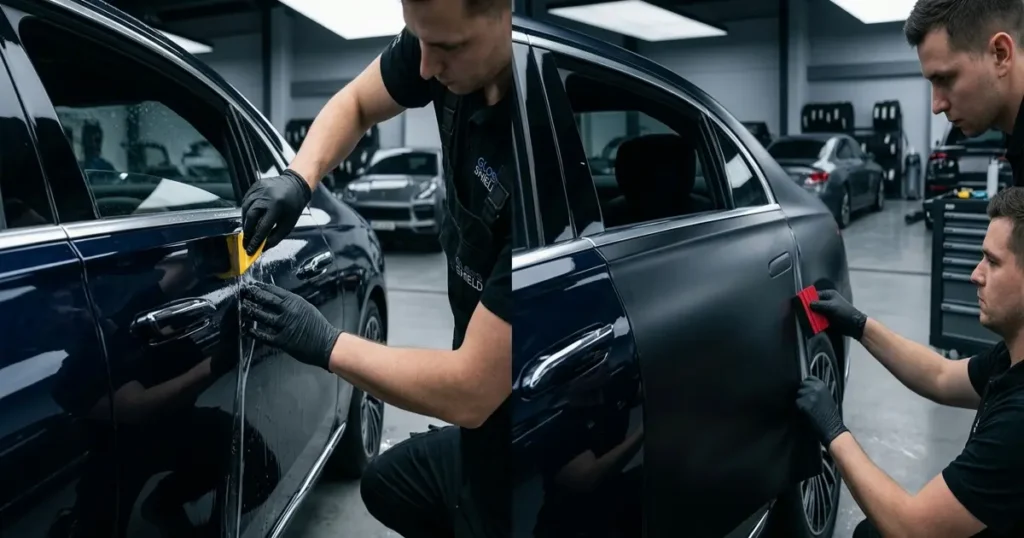
Paint protection film and car wrap are two of the most popular vehicle surface treatments available today, yet many car owners confuse one for the other. If you are trying to decide which option is best for your vehicle, you are not alone. Both solutions offer distinct advantages, but they serve very different purposes. In this guide, we compare paint protection film versus car wrap across purpose, durability, maintenance, and ideal use cases so you can make a confident, informed decision for your car. Key Takeaways What Is Paint Protection Film? Paint protection film, commonly known as PPF, is a thick, transparent thermoplastic urethane film applied directly to a vehicle’s painted surfaces. It acts as an invisible shield between the paint and the outside world. PPF is engineered to absorb impacts from small stones, road grit, bug splatter, and minor abrasions without transferring that damage to the paint below. One of the standout qualities of PPF for car surfaces is its self-healing technology. When exposed to heat, such as sunlight or warm water, minor surface scratches on the film disappear on their own. This makes it an exceptionally durable and low-maintenance protective layer for car owners who want to preserve their vehicle’s original factory finish for years. According to the Car and Driver resource library, paint protection films have become a standard recommendation for new vehicle owners seeking long-term paint preservation. At Corsa Automotive’s detailing and protection services, PPF installation is carried out with precision to ensure full adhesion and a seamless, optically clear finish. What Is a Car Wrap? A car wrap is a large vinyl film applied over the vehicle’s exterior to change its color, add graphics, or create a unique visual effect. Unlike paint protection film, a car wrap is primarily a cosmetic upgrade. It can mimic finishes like matte, satin, gloss, chrome, or even custom printed patterns that would be difficult and expensive to replicate with traditional paint. Car wraps are popular among businesses using their vehicles for branding and among car enthusiasts who want a bold new look without committing to a permanent paint job. The vinyl used in wraps is thinner than PPF and offers limited protection against physical impacts. It is best thought of as a stylistic layer rather than a protective one. Paint Protection Film vs Car Wrap: A Direct Comparison Purpose: Protection vs Aesthetics The most fundamental difference between paint protection film and car wrap is their purpose. PPF is engineered purely for protection. Its primary job is to guard the underlying paint against chips, scratches, UV rays, and chemical stains caused by bird droppings or tree sap. A car wrap, on the other hand, exists to transform the visual identity of your vehicle. It is a design tool more than a protection tool. If you own a new car and want to preserve its showroom condition, ppf for car surfaces is the logical choice. If you want your vehicle to stand out with a custom color or finish, a car wrap delivers that visual impact. Understanding this distinction is the first step toward choosing the right solution for your specific need. Durability: How Long Does Each Option Last? When comparing durability, paint protection film has a clear edge. A professionally installed PPF can last anywhere from seven to ten years under normal conditions, maintaining its clarity and protective integrity throughout. The self-healing property means minor daily wear does not degrade the film’s performance over time. Car wraps typically last three to five years before the vinyl begins to fade, peel, or crack at the edges. Exposure to harsh sunlight, humidity, and Kerala’s monsoon conditions can accelerate this degradation. For car owners in this region, the durability advantage of paint protection film is especially relevant given the demanding local climate. Maintenance: What Each Option Requires Both PPF and car wrap require regular care, but the nature of that care differs. Paint protection film is relatively easy to maintain. Regular washing with a pH-neutral car shampoo and occasional decontamination keeps the film in excellent condition. Because of the self-healing surface, minor swirl marks and light scratches resolve without any intervention. Car wraps demand more careful handling. Automated car washes with brushes can lift or tear the vinyl edges. Harsh chemicals can break down the adhesive layer. Wraps generally need hand washing and periodic inspection to catch any lifting edges before they worsen. If you prefer a lower-maintenance long-term solution, a ppf wrap or full PPF coverage is the more practical investment. Appearance: Clarity, Finish, and Customisation In terms of appearance, both options have strengths in different areas. Paint protection film is optically transparent, meaning your car’s original color and finish remain fully visible. Modern PPF products also come in gloss-enhancing and matte variants, so you can subtly alter the sheen of your paint while still benefiting from full protection. Car wraps win when it comes to creative customisation. The range of colors, textures, and finishes available in vinyl wrap is virtually limitless. From deep matte black to brushed metal or holographic finishes, wraps offer visual possibilities that PPF cannot replicate. For car owners who want a completely new look, a wrap delivers that transformation far more affordably than a full respray. Cost: Which Option Offers Better Value? Cost is a significant consideration for most car owners. Car wraps are generally less expensive than a full paint protection film installation. However, because wraps need to be replaced more frequently, the long-term cost difference narrows considerably. A quality PPF installation is a larger upfront investment, but its longer lifespan and the paint preservation it provides can actually protect the resale value of your vehicle over time. Damage to a car’s original paint can significantly reduce its market value. By investing in PPF for car surfaces from the outset, you are effectively protecting the monetary value of the vehicle alongside its physical appearance. This makes PPF a strong choice for owners of premium, luxury, or high-value cars. You can explore the full range of
What It Is Like to Get Your Car Detailed at Corsa Automotive: A Complete Customer Journey
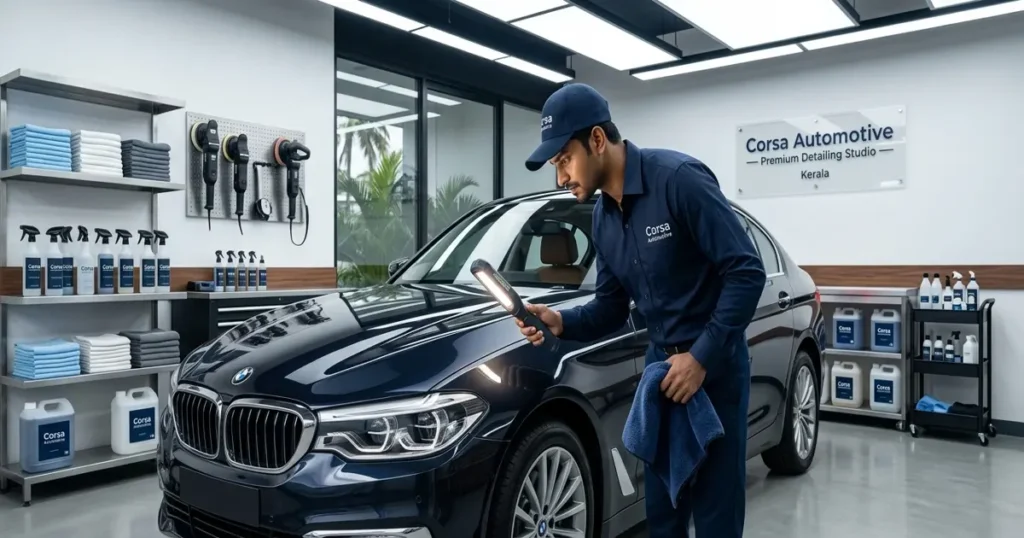
Car detailing is more than a wash and wipe. It is a meticulous, multi-step process that restores your vehicle’s appearance and protects it for the road ahead. If you have been considering professional car detailing services in Kerala but are unsure what the experience involves, this guide is for you. At Corsa Automotive, every detailing session follows a structured journey designed around precision, care, and lasting results. Read on to discover exactly what happens from the moment you drive in to the moment you drive away. Key Takeaways Step 1: Booking Your Car Detailing Appointment The journey begins before your car even enters the studio. Booking a detailing session at Corsa Automotive is straightforward. You can reach the team through the contact page or use the dedicated appointment form to schedule your visit at a time that suits you. When you get in touch, the team will ask about your vehicle type, your primary concerns (scratches, dull paint, dirty interior, and similar issues), and the services you are interested in. This initial conversation helps the team prepare the right tools, products, and time allocation before your car arrives. It also means no time is wasted once the detailing begins. Step 2: Vehicle Inspection and Evaluation Once your car arrives at the studio, the process officially begins with a thorough vehicle inspection. This is the ‘Evaluate’ phase of Corsa’s three-step approach, and it is one of the most important parts of any premium car detailing session. The technician walks around the entire vehicle under proper lighting to assess the paint condition, note any scratches, swirl marks, oxidation, or paint defects, and inspect the interior for stains, odours, or fabric damage. The glass, trim, wheels, and engine bay are also reviewed at this stage. This evaluation is not just a formality. It determines which specific techniques and products will be used on your car. A vehicle with heavy swirl marks will need multi-stage paint correction, while a newer car may only require a single-stage polish before protective coating. The inspection ensures that every step is tailored to your vehicle’s actual condition rather than a generic package. Step 3: Exterior Detailing and Paint Enhancement With the evaluation complete, the team moves into the ‘Enhance’ phase. For most car detailing sessions, exterior work comes first. The car is given a thorough pre-wash to loosen surface contaminants, followed by a hand wash using safe, paint-friendly techniques. Wheel arches, door jambs, and lower panels receive special attention. After washing, the paintwork is clay-bar treated to remove embedded contaminants that a normal wash cannot lift. This leaves the surface smooth and ready for correction or protection. Depending on the service package, the technician may then proceed with multi-stage paint correction and polishing to eliminate swirl marks and restore gloss, or apply a premium wax treatment for lighter maintenance needs. For vehicles that require a higher level of protection, this phase also includes applying nano ceramic coating or graphene coating, both of which create a durable, hydrophobic barrier over the paint. These coatings are applied after correction, not before, which is why the evaluation and correction steps matter so much. You can explore the full range of detailing and protection services offered at Corsa to understand what suits your vehicle best. Paint Protection Film: An Optional Addition Some customers visiting Corsa for a full detail also choose to add Paint Protection Film (PPF) to specific areas of their car, such as the bonnet, front bumper, or door edges. These are the zones most vulnerable to stone chips and road debris, especially on Kerala roads. PPF is applied after paint correction is complete, sealing the corrected surface beneath a clear, self-healing film. This combination of correction plus PPF delivers both aesthetic improvement and long-term physical protection in a single visit. Step 4: Car Interior Detailing and Deep Cleaning Car interior detailing is the part of the process that often surprises customers the most. The results are dramatic, yet the work is painstaking and requires considerable time and skill. The interior cleaning process at Corsa begins with a full vacuum of all surfaces, including under the seats, in the boot, and within door pockets. Carpets and floor mats are removed and cleaned separately. Fabric seats are either steam-cleaned or treated with specialist products depending on their condition, while leather surfaces are cleaned, conditioned, and protected. Hard surfaces such as the dashboard, centre console, door panels, and air vents are carefully wiped down and treated to remove dust, grease, and grime. Glass surfaces inside the cabin are also cleaned for streak-free clarity. If the car has persistent odours, deodorising treatment is applied to refresh the cabin air quality. Fabric protection can be applied at this stage to create a barrier against future spills and staining. This is particularly useful for families or those who frequently use their vehicles for long journeys. According to Auto Geek, a respected automotive detailing resource, proper interior protection significantly extends the life of upholstery and maintains cabin hygiene over time. Engine Bay and Glass Detailing Depending on the service chosen, the detailing session may also include engine bay detailing and windshield and glass coating. Engine bay cleaning removes grease, dust, and grime from under the bonnet, leaving the mechanical components cleaner and easier to inspect during routine servicing. Glass coating applied to the windshield and windows improves water beading during rain, which is a significant benefit given Kerala’s monsoon season. Visibility improves noticeably during heavy rainfall, adding a practical safety benefit alongside the aesthetic improvement. Step 5: The Protect Phase and Final Finishing With all correction, cleaning, and treatment complete, the technician moves into the ‘Protect’ phase. This is where protective coatings are cured, final inspections are carried out, and any remaining touch-ups are completed. Ceramic or graphene coatings, if applied, require a controlled curing period. During this time, the vehicle remains in the studio under clean, dust-free conditions to ensure the coating bonds properly with the paint surface. Rushing this stage would compromise the