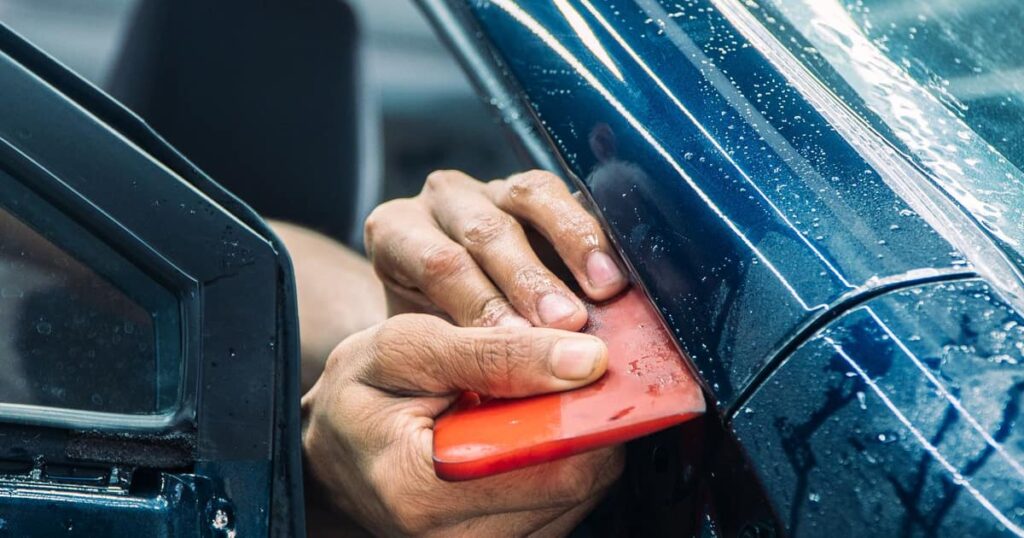
Every kilometre of highway driving is also a kilometre of exposure for your car’s paint. If you are heading home for Onam, your car needs paint protection before the long drive far more than it needs a quick wash. Most owners only think about protection after the first chip appears on the bonnet, by which point the damage is already done and the only remaining option is correction rather than prevention. Here are real reasons why paint protection matters before you leave, based on what actually happens to paint during hours of continuous highway travel across Kerala.
Key Takeaways
- Highway driving exposes paint to stone chips, insect acid, tar and UV rays far more intensely than daily city commuting.
- Paint protection film is a preventive investment, not a cosmetic upgrade, and it works quietly in the background for years after a single application.
- Full Body PPF customers get a flat 50 percent discount on Sun Films this Onam, making it a practical time to protect the whole car in one visit.
Highway Hazards That Damage Paint Fast
A long Onam drive concentrates months of ordinary wear into a single day. These four hazards are the most common causes of visible paint damage after a road trip.
- Stone chips from oncoming and passing traffic: At highway speed, loose gravel thrown up by trucks and buses hits the front bumper, bonnet and mirrors hard enough to chip paint down to the primer. A single long drive can leave dozens of small chips that add up over time.
- Tar and bitumen spatter: Freshly resurfaced stretches, common on Kerala highways before the festival season, spray tar onto lower panels and wheel arches. Tar bonds to paint quickly and becomes far harder to remove the longer it sits.
- Insect residue with acidic content: Bugs hitting the windscreen and bonnet at speed leave residue that is mildly acidic. Left on the paint for even a day in the sun, this residue can etch a faint mark into unprotected clear coat.
- Road debris and small scratches: Sand, twigs and loose debris kicked up on rural roads create fine scratches across the lower body panels, which show up as a dull, scuffed look after just one long trip.
Sun, Heat and Weather Exposure
Kerala sun during a daytime Onam drive is intense, and weather does not always cooperate even during the festival window. These reasons cover exposure risks beyond physical impact.
- UV exposure over hours of daylight driving: Continuous exposure to ultraviolet radiation breaks down the oils in unprotected clear coat, leading to fading and a chalky look on the roof and bonnet over repeated long trips.
- Heat buildup on parked stops: Rest stops during a long drive often mean parking in direct sun for thirty minutes or more, and repeated heat cycles like this accelerate paint oxidation faster than most drivers expect.
- Sudden monsoon showers: Kerala can see late season rain even close to Onam, and mineral deposits from rainwater drying on hot paint create water spots that etch into an unprotected surface over several exposures.
- Dust accumulation on unsealed roads: Dust that settles on paint and mixes with morning dew forms a mildly abrasive paste. Wiped off carelessly, this paste causes fine swirl marks across the surface.
Protecting the Value of the Investment
Beyond the immediate trip, paint condition affects how the car looks and what it is worth for years afterward.
- Resale value protection: A car with visible chips, tar spots and dull paint loses noticeable value at resale. A protected car retains its original finish and photographs better for a private sale or exchange.
- Reduced need for future paint correction: Preventing damage with a film is considerably cheaper over time than paying for paint correction and polishing every few months to undo highway wear.
- Confidence for future long drives: Once paint protection film is applied, every future highway trip, not just this Onam journey, benefits from the same layer of defence without any extra effort from the owner.
- Fewer insurance and claim complications: A car with documented, well maintained paintwork tends to move through insurance inspections and resale valuations more smoothly, since assessors do not have to account for undisclosed prior chip repairs or touch up paint mismatches.
- Peace of mind for the driver, not just the car: Knowing the paint is protected removes one more thing to worry about during a long drive, so the focus stays on the road and the family in the car rather than every passing truck kicking up gravel.
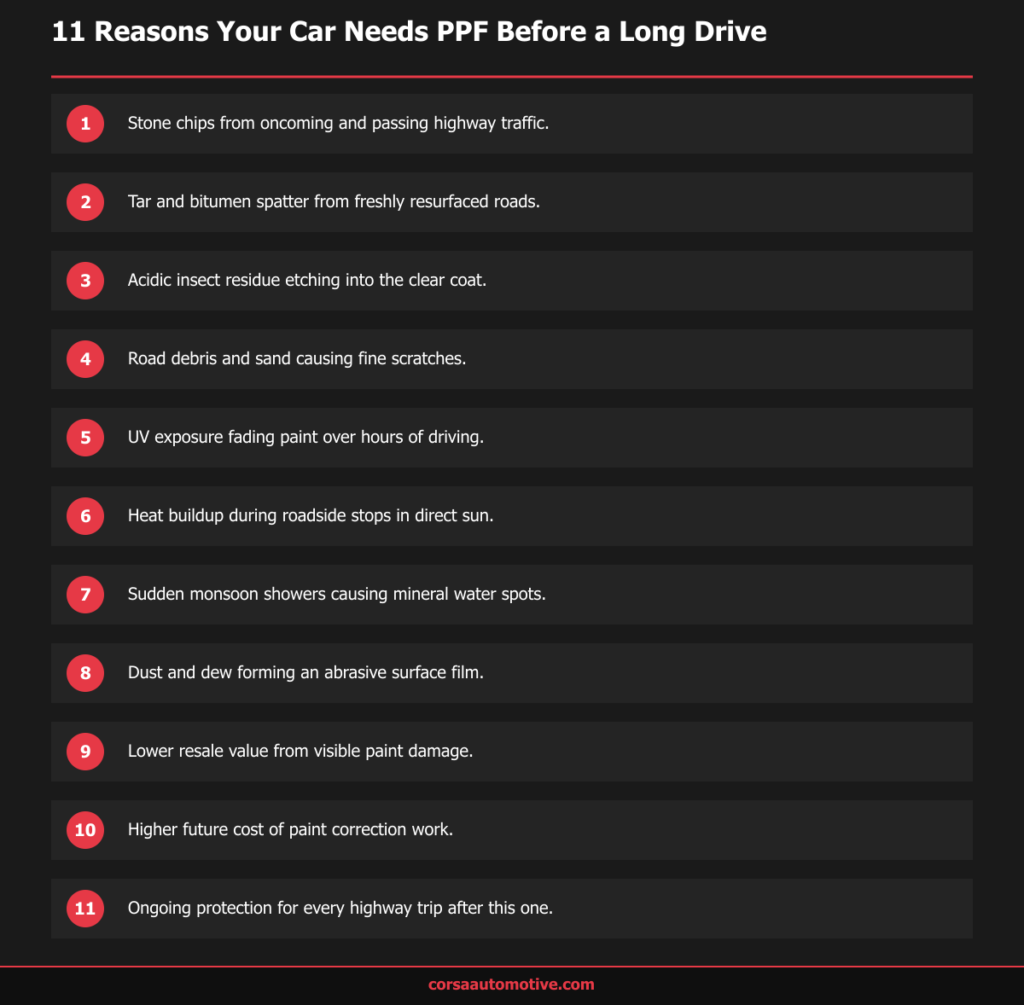
Infographic listing 11 reasons a car needs paint protection film before a long Onam drive
Choosing the Right Film for Kerala Conditions
Not every paint protection film performs the same way in Kerala’s combination of intense sun, high humidity and long monsoon stretches. Film quality varies significantly between budget options and certified products, and the difference shows up first in how the film handles heat and moisture over its lifespan rather than in how it looks on day one.
A film with poor UV inhibitors can yellow within a year or two under constant Kerala sun, while a film with weak adhesive can lift at the edges once humidity works its way underneath during monsoon months. This is why Corsa Automotive works only with internationally certified film, chosen specifically because it holds up to tropical conditions rather than film designed primarily for drier, cooler climates elsewhere.
Ask your studio directly what film brand they use, what warranty is attached to it, and whether that warranty explicitly covers yellowing and edge lifting, since these are the two failure points that show up first in Kerala’s climate if a lower grade film is used.
Coverage choice matters too. Front only packages protect the bonnet, bumper and mirrors, which handles most highway chip risk, while full body coverage extends the same protection to the roof and rear panels, areas that matter more if the return journey involves parking outdoors for several days at a relative’s home before heading back.
How Corsa Prepares Your Car Before the Drive
At Corsa Automotive’s studio in Thellakom, Kottayam, preparing a car for Full Body PPF starts with a thorough decontamination wash and clay treatment, since film applied over trapped dirt or old wax never bonds properly to the panel. Technicians then measure and pre cut film for each panel using the vehicle’s specific pattern, rather than trimming freehand on the car, which keeps panel gaps clean and edges properly sealed against lifting.
The film is applied panel by panel in a dust free bay, heat formed around curves and edges, and left to cure before the car is released. For Onam bookings specifically, this process is scheduled with enough buffer that the film has time to settle before the actual travel date, so the protection is fully cured and ready rather than still curing on the day you drive.
Owners are also given a brief maintenance walkthrough before leaving, covering which cleaning products are safe on fresh film and how to spot early signs of edge lifting, so the protection continues performing correctly well past the Onam trip itself.
For customers travelling out of Kottayam for the festival, the team can also advise on realistic timelines for larger vehicles or SUVs, which sometimes need an extra half day compared to a standard sedan due to the additional panel area involved.
Conclusion
Paint protection film is not about making a car look different. It is about making sure the car that leaves for Onam comes back looking the same, without new chips, tar spots or sun fade. Read our full Paint Protection Film 101 guide for more detail, or book your Full Body PPF appointment with Corsa Automotive before you travel. Full Body PPF customers currently get a flat 50 percent off Sun Films as well.
Frequently Asked Questions
How long does paint protection film take to apply before a trip?
A full body application typically takes one to two days depending on the vehicle and film coverage chosen, so book at least three to four days before your planned departure date.
Does paint protection film need special care after application?
For the first few days, avoid automated car washes and hard scrubbing while the film fully cures. After that, it can be washed and maintained like normal painted panels.
Is PPF only for the front of the car?
Front sections take the most impact, but full body coverage protects the roof, doors and rear panels too, which matters on a long trip where sun and dust affect the entire car, not just the front.
Will paint protection film change how my car looks?
No. Quality film is virtually invisible once applied and preserves the original colour and finish, unlike a wrap, which changes appearance. See our PPF versus wrap comparison for the difference.
Can PPF really stop stone chips completely?
Quality film absorbs most small to medium impacts and often self heals light marks with heat, though very large impacts can still mark the surface. It significantly reduces damage compared to bare paint.
Is it too late to get PPF a few days before Onam?
It depends on studio availability. Contact Corsa Automotive directly to check open slots, since festival season bookings fill up faster than usual in the weeks before Onam.
Does paint protection film help with resale value?
Yes. A car with intact, chip free paint typically fetches a better resale price since buyers can see the original finish has been preserved rather than touched up repeatedly.
What is the difference between PPF and ceramic coating for a road trip?
PPF is a physical film that absorbs impact, while ceramic coating is a chemical sealant that resists stains and water. Many owners combine both for complete protection before long drives.